
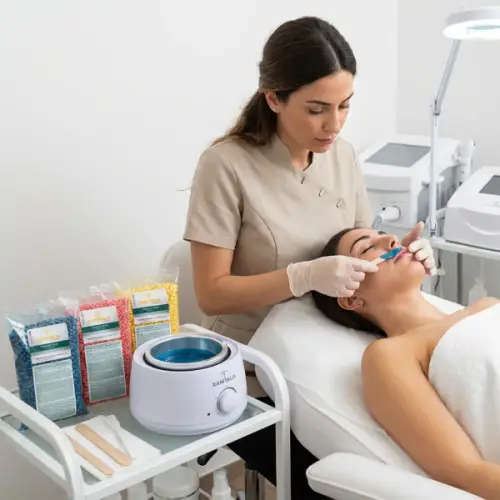
Facial hair is a normal. If you choose to remove upper-lip, chin or jawline hair at home, careful preparation and controlled technique matter more than speed.
This step-by-step guide explains how to wax facial hair at home, when not to wax and how to care for the skin afterwards. If you are uncertain about a skin condition or prescription treatment, consult a qualified healthcare professional or trained beauty therapist before waxing.
Is your skin suitable for facial waxing?
Wax only healthy, intact skin. Postpone the treatment if the area is sunburnt, broken, inflamed, recently exfoliated or affected by an active flare of acne, eczema, rosacea, psoriasis or a cold sore.
Retinoids, isotretinoin and some prescription treatments can make skin more fragile. Do not rely on a generic waiting period: check the instructions for your medication and ask the prescribing professional when waxing is safe. If you take blood-thinning medication, bruise easily or have a condition that affects healing, seek medical guidance first.
Pregnancy and the menstrual cycle can increase skin sensitivity for some people, but they are not automatic contraindications. The important considerations are skin condition, comfort and professional medical advice where relevant.
What you need
- A facial wax or low-temperature hard wax suited to delicate areas
- A temperature-controlled wax heater
- Clean, single-use wooden spatulas
- Pre-wax cleanser or gel
- Post-wax soothing lotion
- Clean cotton pads and a mirror with good lighting
Facial roll-on cartridges can also be convenient, but the roller head touches the skin. Follow the manufacturer’s hygiene instructions and never share a used cartridge between clients or household members.
How to wax facial hair at home
- Allow enough growth. The hair must be long enough for the wax to grip. Follow the wax manufacturer’s recommendation, as ideal length varies by formula and hair type.
- Patch test first. When using a new wax, test a small area according to the product instructions and allow time to check for irritation.
- Clean and dry the skin. Remove makeup, oil, sunscreen and moisturiser with pre-wax cleanser. The area must be completely dry.
- Heat according to the instructions. Stir carefully and test a small amount on the inner wrist. It should feel comfortably warm, never hot.
- Work in small sections. Apply the wax in the direction of hair growth. For hard wax, create an even layer with a slightly thicker edge that can be lifted safely.
- Support the skin. Once the hard wax has set but remains flexible, hold the skin taut and remove the wax quickly, staying close and parallel to the skin.
- Avoid repeatedly waxing the same spot. Use tweezers for a few remaining hairs rather than repeatedly stressing the skin. If you are new to waxing,choose Xanitalias Multi directional wax)
- Soothe the area. Apply a gentle post-wax product without rubbing.
Aftercare for the first 24 to 48 hours
- Avoid hot showers, steam, saunas, intense exercise and direct sun.
- Pause retinoids, acids, scrubs and strongly fragranced products until the skin has settled, following professional advice where applicable.
- Avoid touching the area unnecessarily.
- Use broad-spectrum sunscreen during the day.
- Once the skin is calm, introduce gentle exfoliation to help reduce ingrown hairs.
Mild temporary redness can occur. Stop and seek professional advice if you develop severe pain, blistering, lifted skin, marked swelling or irritation that does not settle.
When to book a professional
Professional help is a sensible choice for first-time brow shaping, heavily regrown or very coarse facial hair, reactive skin, prescription skincare use or repeated irritation. A trained therapist can assess the skin, select the correct wax and work precisely around delicate facial contours.
Shop professional facial-waxing essentials
Explore The Waxpot’s professional waxing range for facial wax, hard wax pebbles, heaters and preparation and aftercare products. For more help choosing a formula, read our hard wax versus soft wax guide and our guide to preventing ingrown hairs after waxing.