

The Spa Experience: Small Details Big Impressions
Micro-Observations That Shape Client Impressions
Stepping into a spa, clients expect an oasis of comfort, cleanliness, and professionalism. Yet, beneath the surface of soothing music and aromatic candles, small details often reveal themselves—details that can shape perceptions and experiences in ways both subtle and profound. This article explores the spa environment through the eyes of a discerning client, highlighting the moments and micro-observations that define the overall impression of luxury, care, and attention to detail.
The “Lying Down” Perspective

While spa owners typically view the treatment room from a standing position, clients experience it from the massage table. This unique vantage point exposes areas that may go unnoticed during routine inspections, but are immediately apparent to guests.
- The Underside: Clients may spot dust bunnies under the face cradle or on the legs of the trolley, which can detract from the sense of cleanliness and care expected in a spa.
- The Ceiling: Cobwebs in the corners or a flickering, harsh LED bulb can disrupt the tranquil ambiance and diminish the “zen” feeling as soon as a client opens their eyes.
- The Vents: AC vents caked with grey dust can deliver uncomfortable airflow directly over the treatment area, undermining the expectation of a pristine environment.
Sensory Overload (The Wrong Kind)
The spa environment is intended to soothe the senses, but certain missteps can have the opposite effect. Clients notice these disruptions, which can compromise their relaxation.
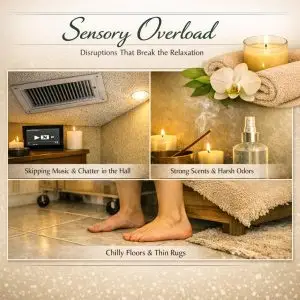
- The Soundtrack: Hearing the “Chill Lullabies” playlist skip or catching the muffled gossip of staff in the hallway through the door can break the immersion and relaxation.
- The Smell of “Clean”: A heavy scent of bleach or synthetic air freshener may cause discomfort, triggering headaches instead of promoting relaxation.
- The Temperature: Stepping onto a freezing floor with bare feet because the “luxury” rug is worn thin diminishes the sense of comfort and indulgence.
The “Micro-Icks” of Professionalism
Small lapses in professionalism are often magnified in the spa setting, where clients expect impeccable standards. These “micro-icks” can have a lasting impact on their perception of the spa’s quality.

- The Therapist’s Hands: Clients feel every “hook” of a chipped nail or a rough callus during a treatment, which can disrupt their comfort and trust.
- The Uniform: Faded tunics with old oil stains or hair (not the client’s) stuck to a therapist’s sleeve are noticeable and detract from the sense of hygiene and professionalism.
- Tool Integrity: Using a nail buffer that appears worn or a “sanitized” tray with water spots and old product residue can undermine confidence in the spa’s sanitary practices.
- Unnecessary contact: While clients expect skin contact, therapists should control their movements and avoid accidental touch
- The therapist’s personal hygiene is essential. Chewing gum, bad breath, burping, sniffling, and body odour are major no-no’s—especially in a small treatment room, where these issues are more noticeable and easily amplified.
The Product Presentation
Even the items presented to clients contribute to their overall impression. Signs of wear, lack of care, or poor presentation can diminish the sense of luxury.
- Gunked-up Lids: Massage oil bottles with sticky, yellowing drips down the side,tubs with dried up residue,all signal neglect and lack of attention to cleanliness.
- The Towel Test: A towel that is clean but so “well-loved” that the edges are fraying and it feels like sandpaper against the skin can lessen the feeling of pampering.
- The “Luxury” Water: A water station with fingerprints all over the carafe or a wilted lemon slice that’s been there since yesterday fails to meet expectations of freshness and care.
- Unhygienic practices: Using your hand to scoop product from jars even if it is gloved, rather than a spatula or proper portioning tool, raises the risk of cross-contamination.
- The Therapist’s Hands: Every imperfection, such as a chipped nail or rough skin, can be felt by clients during treatment and may disturb their sense of comfort and trust.
- The Uniform: Faded tunics with old oil stains or hair (not the client’s) stuck to a therapist’s sleeve are noticeable and detract from the sense of hygiene and professionalism.
- Tool Integrity: Using a nail buffer that appears worn or a “sanitized” tray with water spots and old product residue can undermine confidence in the spa’s sanitary practices.
- Unnecessary contact: While clients expect skin contact, therapists should control their movements and avoid accidental touch
- The therapist’s personal hygiene is essential. Chewing gum, bad breath, burping, sniffling, and body odour are major no-no’s—especially in a small treatment room, where these issues are more noticeable and easily amplified.
Conclusion: Elevating the Spa Experience Through Attention to Detail
In the spa and wellness industry, it’s often the tiniest details—those subtle “micro-icks”—that truly define the client experience. From the faint smell of cleaning chemicals to threadbare towels, these seemingly minor oversights can quietly erode the atmosphere of luxury and relaxation we aim to deliver. By focusing our attention on these often-neglected aspects, we not only enhance our professionalism, but also ensure that every guest feels genuinely cared for and content. Ultimately, it’s our commitment to perfecting these small touches that transforms an ordinary spa visit into something unforgettable
Bonus Tip:
- Before you book that “luxury” package, do a 2-minute digital audit.
- Don’t just look at the overall star rating; look at the mentions of “Cleanliness” in the reviews.
- Search the Reviews for Keywords: Go to Google or Yelp and search for “dirty,” “smell,” “vent,” or “broken.”
- Look for “Response to Negativity”: Does the owner apologize and state a specific fix?
- The “Lobby vs. Room” Photo Check: If the only photos on their Instagram are of the lobby or the front desk, be wary.